
Vietnam and the Philippines: A History of Resourcefulness
Published 12/10/2025 in Scholar Travel Stipend
Written
by Dana Hua |
12/10/2025
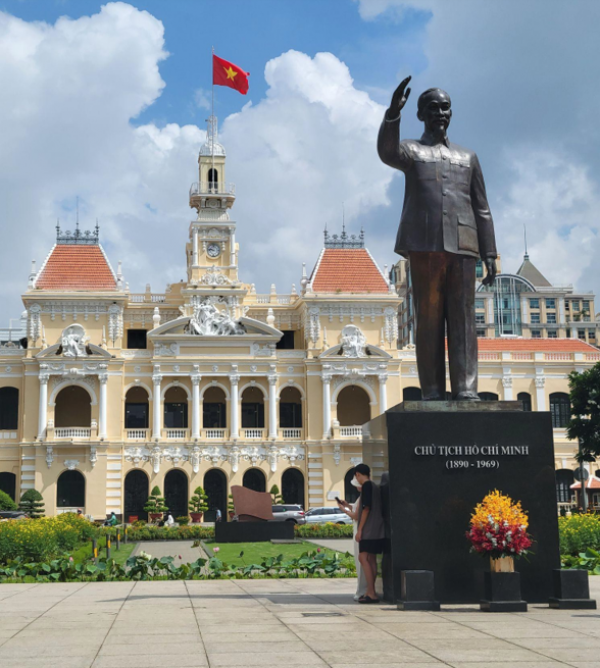
According to the United Nations Human Development Index (HDI) which considers a nation’s overall economic growth, life expectancy, health, education and quality of life, both Vietnam and the Philippines are considered to be developing nations. This comes as no surprise once we consider their turbulent paths towards national sovereignty with neither country achieving true independence until the mid to late 20th century. However, despite their difficult beginnings, both nations have successfully harnessed their pasts to bolster national economic growth and provide their citizens with productive and satisfying lives by opening up their past historical landmarks for tourism.
Beginning in the mid 19th century, France began building its Indochina colonies, leading to Vietnam’s first non-Chinese colonization in 1862. To oppose French colonial rule, Ho Chi Minh formed the Indochinese Communist Party. However, before being able to declare independence or defeat the French, Vietnamese sovereignty once again fell to another nation in 1940 – Japan – and would remain in their control until the end of World War 2 in 1945. Ho Chi Minh takes this opportunity to establish a Vietnamese government in the north and declare independence for the nation. However, conflict in Vietnam did not end with Minh’s declaration as France, Britain, and the United States fought to establish a democratic nation in place of Minh’s communist party rule. It was not until 1975 that all foreign troops left Vietnam and not until 1976 that the Socialist Republic of Vietnam was finally established with North and South Vietnam finally unified again.
Similar to Vietnam, the Philippines did not emerge as its own sovereign nation until after World War 2 in 1946. However, unlike Vietnam, the Philippines faced western colonization by Spain starting in 1565, before they ever developed their own unified central government, and remained in Spanish rule for 333 years. Cebu was the first Spanish settlement followed by Manila in 1571. Due to the long period of Spanish colonialization, much of Filipino culture today such as their dominant Roman Catholicism religion and Spanish-based vocabulary can be traced back to Spain. The Philippines also faced occupation by the United States during the Spanish-American war in 1898. While Filipino forces originally supported the US during their war against Spain, fighting between Filipino forces and US troops soon broke out when the US refused to allow Filipino troops access to Manila, resulting in a series of nationalist resistance to US rule until the Filipino leader Emilio Aguinaldo was finally captured in 1901. US influence took over the Philippines at this point, providing increased educational opportunities and the opportunity for democratic self-governance under US tutelage. The Philippines would later be placed under Japanese occupation from 1942-1945 before they were ultimately able to declare independence as their own nation at the conclusion of World War 2.
During my trip to Manila in the Philippines, I stayed inside Intramuros, the historic walled city that was the original city of Manila during Spanish occupation. Intramuros literally translates to “inside the walls” and is entirely surrounded by fortifications that protected the original city. The district remains well-preserved with many historical landmarks open for public education today such as Fort Santiago, the Manila Cathedral, and a restored 1850s Spanish colonial house. The most shocking part of visiting Manila for me was the juxtaposition of development between different areas of the city. For example, standing on the walls of Intramuros, I was able to see the old fort walls from the 1500s, the golf course next door, and the many skyrises housing 5-star hotels and corporate offices, emphasizing the lengthy history and resilience of the Filipino people (see image).

In Manila, I also visited Binondo, the city’s Chinatown and the oldest Chinatown in the world. It was originally established for Chinese immigrants to the Philippines, but eventually became a district known for converting Chinese immigrants to Catholicism, intermarriage between Chinese immigrants and native Filipinos, and a hub for business and finance. To this day, it still remains a hub for shopping containing several streets for textiles, fruits, jewelry, Chinese foods, and other goods.
During my trip, I was also able to visit Ho Chi Minh, formerly Saigon, in Vietnam. I was able to visit the War Remnants Museum and its many exhibitions on Vietnam’s colonial history as they celebrated their 50th year of independence and unification. In Vietnam, the era of conflict between 1954 and 1975, dubbed the “Vietnam War” in the United States, is remembered as the “American War” (or the “War against the Americans to Save the Nation” or “Resistance War against America”). For the Vietnamese, they were fighting for unification and sovereignty. In South Vietnam, US-backed Ngo Dinh Diem faced opposition from both the North and South after countless acts of continued incompetence, corruption, and intimidation by Diem and his regime that was composed primarily of only his family members. For Vietnam, the war was a fight for the survival of their nation by means of a competent government and a return to the idea of one people, one nation.

I was also able to visit the Cu Chi Tunnels used by the Viet Cong (also known as the National Liberation Front or People’s Liberation Armed Forces in Vietnam) during the war (see image). Serving as an educational tourist attraction in Ho Chi Minh, the area is continuously searched for unexploded bombs from the war as well as new tunnels. The original tunnels are around 2 meters tall and served as a base for guerilla warfare, complete with cooking, sleeping, storage, and hospital areas. In addition to being able to crawl through the tunnels themselves, the visit also included an explanation of the numerous traps placed around the tunnels, an explanation of how the soldiers recognized each other, and a diagram of the possible tunnel network configuration (see image).
Overall, my visit to Vietnam and the Philippines emphasized to me the absolute necessity of diverse perspectives in tackling global issues. Without understanding the whole picture – past and present – and each side’s goals in a situation, it is impossible for all sides to be satisfied and the best blueprint to be developed. In order to truly bring together the best ideas and innovative resourcing to develop blueprints for tackling some of our most critical global issues as stated in the Milken Institute’s mission, the means most conducive to achieving these goals is through education as stated in The Milken Family Foundation’s mission.
Beginning in the mid 19th century, France began building its Indochina colonies, leading to Vietnam’s first non-Chinese colonization in 1862. To oppose French colonial rule, Ho Chi Minh formed the Indochinese Communist Party. However, before being able to declare independence or defeat the French, Vietnamese sovereignty once again fell to another nation in 1940 – Japan – and would remain in their control until the end of World War 2 in 1945. Ho Chi Minh takes this opportunity to establish a Vietnamese government in the north and declare independence for the nation. However, conflict in Vietnam did not end with Minh’s declaration as France, Britain, and the United States fought to establish a democratic nation in place of Minh’s communist party rule. It was not until 1975 that all foreign troops left Vietnam and not until 1976 that the Socialist Republic of Vietnam was finally established with North and South Vietnam finally unified again.
Similar to Vietnam, the Philippines did not emerge as its own sovereign nation until after World War 2 in 1946. However, unlike Vietnam, the Philippines faced western colonization by Spain starting in 1565, before they ever developed their own unified central government, and remained in Spanish rule for 333 years. Cebu was the first Spanish settlement followed by Manila in 1571. Due to the long period of Spanish colonialization, much of Filipino culture today such as their dominant Roman Catholicism religion and Spanish-based vocabulary can be traced back to Spain. The Philippines also faced occupation by the United States during the Spanish-American war in 1898. While Filipino forces originally supported the US during their war against Spain, fighting between Filipino forces and US troops soon broke out when the US refused to allow Filipino troops access to Manila, resulting in a series of nationalist resistance to US rule until the Filipino leader Emilio Aguinaldo was finally captured in 1901. US influence took over the Philippines at this point, providing increased educational opportunities and the opportunity for democratic self-governance under US tutelage. The Philippines would later be placed under Japanese occupation from 1942-1945 before they were ultimately able to declare independence as their own nation at the conclusion of World War 2.
During my trip to Manila in the Philippines, I stayed inside Intramuros, the historic walled city that was the original city of Manila during Spanish occupation. Intramuros literally translates to “inside the walls” and is entirely surrounded by fortifications that protected the original city. The district remains well-preserved with many historical landmarks open for public education today such as Fort Santiago, the Manila Cathedral, and a restored 1850s Spanish colonial house. The most shocking part of visiting Manila for me was the juxtaposition of development between different areas of the city. For example, standing on the walls of Intramuros, I was able to see the old fort walls from the 1500s, the golf course next door, and the many skyrises housing 5-star hotels and corporate offices, emphasizing the lengthy history and resilience of the Filipino people (see image).
In Manila, I also visited Binondo, the city’s Chinatown and the oldest Chinatown in the world. It was originally established for Chinese immigrants to the Philippines, but eventually became a district known for converting Chinese immigrants to Catholicism, intermarriage between Chinese immigrants and native Filipinos, and a hub for business and finance. To this day, it still remains a hub for shopping containing several streets for textiles, fruits, jewelry, Chinese foods, and other goods.
During my trip, I was also able to visit Ho Chi Minh, formerly Saigon, in Vietnam. I was able to visit the War Remnants Museum and its many exhibitions on Vietnam’s colonial history as they celebrated their 50th year of independence and unification. In Vietnam, the era of conflict between 1954 and 1975, dubbed the “Vietnam War” in the United States, is remembered as the “American War” (or the “War against the Americans to Save the Nation” or “Resistance War against America”). For the Vietnamese, they were fighting for unification and sovereignty. In South Vietnam, US-backed Ngo Dinh Diem faced opposition from both the North and South after countless acts of continued incompetence, corruption, and intimidation by Diem and his regime that was composed primarily of only his family members. For Vietnam, the war was a fight for the survival of their nation by means of a competent government and a return to the idea of one people, one nation.
I was also able to visit the Cu Chi Tunnels used by the Viet Cong (also known as the National Liberation Front or People’s Liberation Armed Forces in Vietnam) during the war (see image). Serving as an educational tourist attraction in Ho Chi Minh, the area is continuously searched for unexploded bombs from the war as well as new tunnels. The original tunnels are around 2 meters tall and served as a base for guerilla warfare, complete with cooking, sleeping, storage, and hospital areas. In addition to being able to crawl through the tunnels themselves, the visit also included an explanation of the numerous traps placed around the tunnels, an explanation of how the soldiers recognized each other, and a diagram of the possible tunnel network configuration (see image).
Overall, my visit to Vietnam and the Philippines emphasized to me the absolute necessity of diverse perspectives in tackling global issues. Without understanding the whole picture – past and present – and each side’s goals in a situation, it is impossible for all sides to be satisfied and the best blueprint to be developed. In order to truly bring together the best ideas and innovative resourcing to develop blueprints for tackling some of our most critical global issues as stated in the Milken Institute’s mission, the means most conducive to achieving these goals is through education as stated in The Milken Family Foundation’s mission.

References
https://www.britannica.com/event/Vietnam-War/French-rule-ended-Vietnam-dividedhttps://www.britannica.com/topic/history-of-Philippineshttps://afe.easia.columbia.edu/timelines/vietnam_timeline.htmhttps://worldpopulationreview.com/country-rankings/developing-countries
Author(s):
