
Tourism and Labor in St. Thomas
Published 03/30/2026 in Scholar Travel Stipend
Written
by Mekdelawit Gebreslassie |
03/30/2026
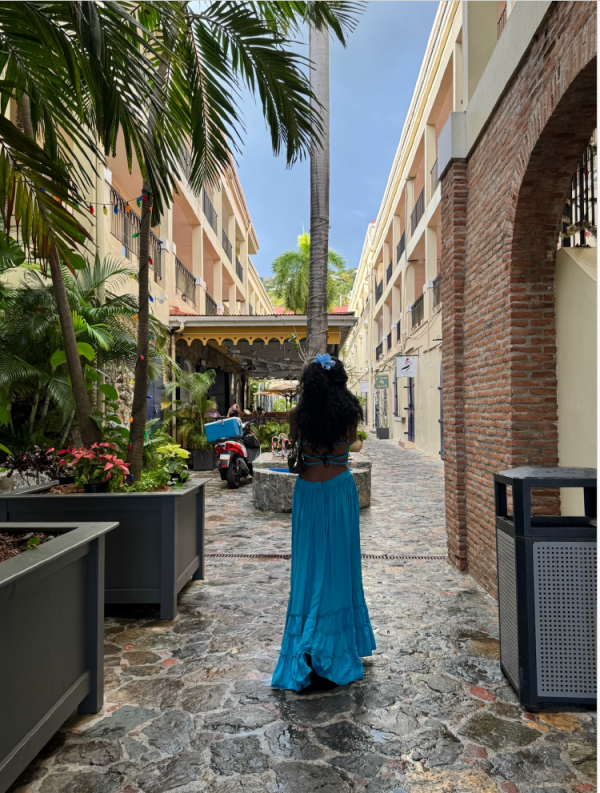
St. Thomas is defined by the movement of people and capital through its turquoise harbors and narrow hillside roads. It may be seen in the hordes of cruise passengers arriving in Charlotte Amalie, as well as hotel personnel commuting from inland areas to beachside resorts. Tourism influences virtually every aspect of the island's economy.
Hurricanes Irma and Maria abruptly halted such movement in September 2017. Roofs were ripped off hotels, homes, and the airport, cruise terminals were closed, and flights were canceled. But out of this devastation emerged an unexpected twist: while tourism initially fell, rebuilding efforts created new jobs and changed the island's labor market.
Before the storms, tourism made up approximately 60% of the US Virgin Islands’ GDP and employed more than half of all private-sector workers. When Irma struck as a Category 5 hurricane, it destroyed most major resorts and closed the cruise port for months. The economic impact was immediate and devastating. Hotels sat practically vacant, thousands of workers were laid off, and local businesses reliant on tourists—taxi drivers, tour operators, and souvenir vendors—lost their primary source of revenue. Charlotte Amalie, once bustling with guests, was silent. With tourism gone, the island's reliance on one industry became brutally obvious.
At the same time, the storms triggered major rebuilding efforts. Within weeks, federal aid, insurance payouts, and donations from non-profit organizations began to arrive on the island. Construction companies from both Puerto Rico and the mainland US arrived to repair roofs, rebuild marinas, and reconnect power lines. Many former tourism workers have found new positions in the rebuilding sector. Hotel staff joined debris cleanup groups, learned carpentry, or took on logistics responsibilities. These vocations were distinct from hospitality work, yet they provided critical revenue and kept people from leaving the island.
This shift demonstrates how disasters can divert economic activity rather than eliminate it. Before the storms, most professions required serving tourists. Afterwards, work centered on repairing and maintaining infrastructure. The Port of Charlotte Amalie engaged a larger staff to fix the docks and security systems in anticipation of cruise ships’ return. Resorts such as Frenchman's Reef and Bolongo Bay undertook extensive reconstruction efforts that employed local workers for years before reopening. Even with fewer visitors, the tourism industry continued to shape employment through restoration and preparedness.

Conversations with St. Thomas residents emphasized how critical this workforce transition was, particularly for young adults. Several locals explained that the recovery effort generated new opportunities that did not exist before the storms. Young individuals who would have otherwise left the island for work found work in construction, electrical repair, and transportation as part of the rebuilding process. One resident described how the storms cost them their jobs, but the rebuilding offered young people a reason to stay. For many recent high school graduates and college-aged workers, reconstruction provided their first steady source of income and an opportunity to learn practical skills. These personal accounts reveal that recovery work did more than simply replace lost tourism jobs; it also temporarily increased access to employment for younger generations who had struggled to enter the labor market before the hurricanes.
By late 2018, guests were slowly returning. Cruise ships resumed their routes, planes resumed, and hotels reopened with improved amenities. However, tourism appeared different than before. New marketing campaigns showed St. Thomas as more than just a tourist destination, but also a symbol of resistance. Tourists were encouraged to “support recovery with their visit,” transforming tourism into a form of economic assistance. Hospitality jobs resumed alongside construction labor, resulting in a mixed economy of service and restoration.
The hurricanes also highlighted the dangers of relying heavily on tourism. The long months without tourists demonstrated the necessity to diversify into renewable energy, maritime research, and remote digital jobs. Nonetheless, tourism demonstrated astonishing adaptability. It transitioned from providing leisure to driving recovery, from the entertainment business to an employer of last resort. Jobs weren't just restored; they were momentarily reinvented.

The post-hurricane transformation of St. Thomas’s tourism infrastructure serves as a literal and metaphorical foundation for community-based resilience. By shifting the labor focus from passive service to active reconstruction, the island successfully bypassed the “recovery trap” where external contractors extract wealth, instead empowering residents, particularly the youth, to become the architects of their own environment. This transition fostered a deeper sense of cultural identity, as the infrastructure was no longer merely a stage set for visitors but a hard-earned testament to local endurance. When tourists returned to a “symbol of resistance” rather than just a destination, the power dynamic shifted; the infrastructure itself became a medium for storytelling, rooting the island's economic engine in the lived experience and grit of its people.
Furthermore, the rebuilding process provided a critical “reset” for environmental sustainability and economic diversification. The devastation of Irma and Maria laid bare the fragility of a tourism monoculture, prompting an infrastructure overhaul that prioritized climate adaptation, such as hardened docks and reinforced resorts, alongside a growing dialogue on renewable energy and maritime stewardship. This evolution demonstrates that sustainable tourism is not just about “green” amenities, but about building a rugged economy capable of diverting labor and capital into maintenance and preservation when leisure is interrupted. Ultimately, the new St. Thomas infrastructure reflects a more balanced ecosystem in which the movement of people through its harbors is matched by strengthened internal capacity to withstand the rising tides of a changing climate.
Hurricane Irma's economic impact on St. Thomas demonstrates that tourism can be both a liability and a source of strength. The storms halted the flow of visitors, but they also triggered a new influx of reconstruction funds and work. The island suffered enormous losses, but it also gained workers skilled in rebuilding their own communities.
Citations
Federal Emergency Management Agency. Hurricane Irma and Maria: U.S. Virgin Islands Recovery Overview. FEMA, 2018, https://www.fema.gov/disaster/historic/hurricane-irmamaria-us-virgin-islands/
NOAA National Hurricane Center. Hurricane Irma (AL112017) Advisory Archive. National Oceanic and Atmospheric Administration, 2017, https://www.nhc.noaa.gov/archive/2017/IRMA.shtml/
U.S. Bureau of Economic Analysis. Gross Domestic Product for the U.S. Virgin Islands. U.S. Department of Commerce, 2016, https://www.bea.gov/news/2017/gross-domestic-product-us-virgin-islands-usvi-2016/
U.S. Department of Labor, Bureau of Labor Statistics. Disaster Recovery Employment in the U.S. Virgin Islands. U.S. Department of Labor, 2018, https://www.bls.gov/eag/eag.vi.html/
U.S. Virgin Islands Department of Tourism. Tourism Recovery and Economic Impact Report. Government of the U.S. Virgin Islands, 2019, https://uploads-ssl.webflow.com/6329bc97af73223b575983ac/647f062d8a11b0e840b2ed31_EIR2023-USVirginIslands.pdf/
World Bank. The Caribbean: Recovery After Natural Disasters. World Bank Group, 2017, https://www.worldbank.org/en/news/speech/2017/10/13/after-the-storm-recovery-and-resilience-in-the-caribbean/
Author(s):
