
The New Gravity of Global Capital
Published 03/23/2026 in Scholar Travel Stipend
Written
by Steven Li |
03/23/2026
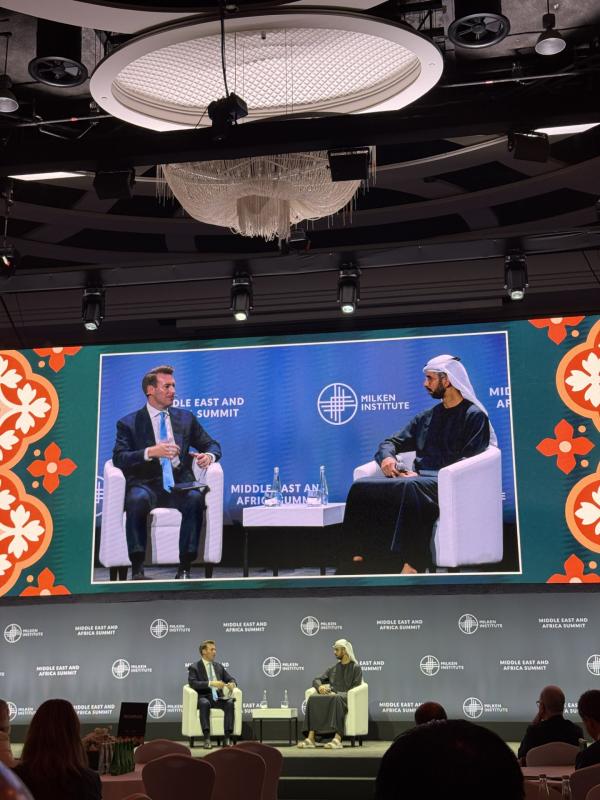
Historically, the flow of global capital and ambition was unidirectional in the 20th century. The United States was not just a country; the American Dream heralded a meritocracy for anyone seeking to build the future. However, that gravity has quickly shifted eastward.
The UAE has become the top destination for migrant millionaires, with a net inflow of nearly 10,000 high-net-worth individuals in 2025 alone [1]. We are witnessing a historic reallocation of wealth and talent, with the U.K. suffering the highest outflow of millionaires—losing 16,500 individuals due to unfavorable tax policies, safety concerns, and economic stagnation [2]. While the U.K., Europe, and America face a historic brain drain, the UAE is experiencing a reciprocal brain gain.
A common misconception is to attribute this power shift solely to a “zero-tax” environment or geography. To do so reduces a deliberate, multi-decade economic strategy to an accident. In the UAE Economic Vision 2030, outlined at the beginning of the century, the country recognized early that human capital would be the backbone of its future [3]. In a nation where over 88% of the population are expatriates [4], the government has turned its demographics into a competitive advantage, attracting capital and talent through long-term residency schemes like the Golden Visa.
Nowhere is this transformation more visible, or more critical, than in the technology sector. We are past the era where the Gulf states simply imported Western technology to consume it. Today, the UAE is financing, building, and leading the deployment of next-generation infrastructure.
From attending the Milken Middle East and Africa Conference, I saw firsthand the movement of capital within the region during this AI boom—from sovereign wealth fund investments by Mubadala to the proliferation of G42 companies. Abu Dhabi has not been a bandwagon country; it has doubled down on a detailed strategy, having appointed the world’s first Minister of State for AI as early as 2017 [5]. The atmosphere was not one of a rising nation playing catch-up, but of a sovereign capital allocator unlocking solutions for archaic Western governments. With the power of capital, the nation has been able to make strategic bets that other governments are too gridlocked to match. I sat in on a session titled "The Silicon Valley-DC-Middle East Connection," which featured a lineup that effectively mapped the new power brokerage of AI: Armaan Ali of Human Capital, Clemens Mewald of the enterprise AI startup Brain Co., and Ashish Koshy of G42’s Inception.
The "AI storm" born in Silicon Valley has hit a hard physical wall: the energy bottleneck. Training the next generation of frontier models requires gigawatts of power that the aging U.S. grid simply cannot supply on a relevant timeline. Hearing leaders like Mubadala’s Khaldoon Al Mubarak discuss projects like Stargate UAE—a supercomputing partnership with OpenAI, NVIDIA, Oracle, Cisco, and SoftBank—it became clear that the UAE is positioning itself as the fuel of the AI revolution [6]. By trading their energy and capital for American intellectual property, the Emiratis further entrench themselves into the U.S. sphere of influence while hedging against Chinese dominance.

This is the sophisticated coordination of world capital, San Francisco’s innovation, and D.C.’s strategic policy in real-time. The age-old problem of resource constraints is tackled by a modern, multinational coalition. As Clemens Mewald and Ashish Koshy discussed the integration of enterprise layers (Brain Co.) and foundational models (Inception), I realized I was watching the supply chain of the 21st century being forged. As they move further away from shipping oil, the UAE will be shipping compute.
In all sectors, diversification has paid dividends. In 2025, non-oil foreign trade hit a record AED 3.8 trillion (approximately USD 1.03 trillion), meeting the nation’s 2030 targets five years ahead of schedule [7]. More importantly, the macroeconomic structure is completely reversed from just a few decades ago. The non-oil sector now contributes over 77% to real GDP, reducing oil’s share to just under 23% of the economy [8].
In the context of the Greater GCC and the political-economic situation of the Middle East, the Gulf state’s economic boom and resilience have served as a vital political stabilizer. As the U.S. retreats from its traditional role as global policeman, the world order is becoming increasingly multi-polar. The rise of nations like the UAE has created an anchor—certainly economically, and increasingly politically through frameworks like the Abraham Accords.
On a personal note, this was my second time visiting Abu Dhabi. In contrast with my first observations of the city, I felt distinctly more of a traveler and less of a tourist. Through conversations with several expats who settled in the UAE (and gibed at my mandatory global American tax rate), I gained a real intellectual perspective of the region beyond the "wow factor" the UAE is famous for.
As a Chinese-American growing up in LA, my world has always been distinctly East and West. But this introduction to the new world of the Middle East offers a sobering perspective. Beyond the statistics of importing millionaires, the UAE is exporting a model of stability, proving that a small state with vision and capital can punch well above its weight. Large economies, while ever so important, are not the only options.
The U.S. for decades has held the monopoly on the American Dream—a new land of limitless possibility and freedom. Although I'm still deeply patriotic and uniquely confident in it, I felt myself challenged by individuals who have found their “dream” in the solace of the UAE.
Leaving the Emirates, I’m left with the sense that I’ve witnessed a nation racing against time. The 'biggest, grandest, tallest' aren't just vanity metrics; they are aggressively reallocating capital from oil into tourism, AI, and soft power to secure the future. The UAE is a model that challenges Western assumptions yet proves a vital ally, demonstrating that economic liberalism can thrive, for now, without political liberalism. Abu Dhabi is a land of contradictions, but its ambition is absolute. In a shifting world order, it stands as a testament that with enough vision and capital, you can quite literally build a new future from the sand.
Bibliography
[1] Henley & Partners. (2025). Henley Private Wealth Migration Report 2025: Abu Dhabi - The New Center of Gravity for Global Wealth. https://www.henleyglobal.com/publications/henley-private-wealth-migration-report-2025/
[2] Henley & Partners. (2025). Henley Private Wealth Migration Report 2025: UK's Millionaire Exit. https://www.henleyglobal.com/publications/henley-private-wealth-migration-report-2025
[3] Government of Abu Dhabi. (2008). The Abu Dhabi Economic Vision 2030.
[4] United Nations Department of Economic and Social Affairs (UN DESA). (2024). International Migrant Stock 2024; Gulf News. (2024). UAE Population Statistics. https://www.globalmediainsight.com/blog/uae-population-statistics//
[5] UAE Cabinet. (2017). Appointment of Minister of State for Artificial Intelligence. https://u.ae/en/about-the-uae/digital-uae/whole-of-government-approach/Chief-Artificial-Intelligence-Officer-CAIO/
[6] IntuitionLabs; SoftBank Group Corp. (2025). OpenAI, Oracle, and SoftBank expand Stargate with new AI data center sites including Stargate UAE. https://intuitionlabs.ai/articles/openai-stargate-datacenter-details/
[7] TradeArabia; The National News. (2026, January 31). UAE’s non-oil foreign trade tops AED 3.8 trillion for first time. https://www.khaleejtimes.com/business/energy/uaes-non-oil-foreign-trade-exceeds-dh38-trillion-for-first-time-in-history/
[8] Emirates News Agency (WAM). (2025, December 2). Non-oil sector contributes 77.5% to UAE's real GDP. https://www.wam.ae/en/article/15wfvtd-minister-economy-tourism-775-non-oil-share-real/
Author(s):
