
The Authenticity Paradox: How Tourism Changes What We Travel to Find
Published 03/20/2026 in Scholar Travel Stipend
Written
by Alyssa Chiang |
03/20/2026
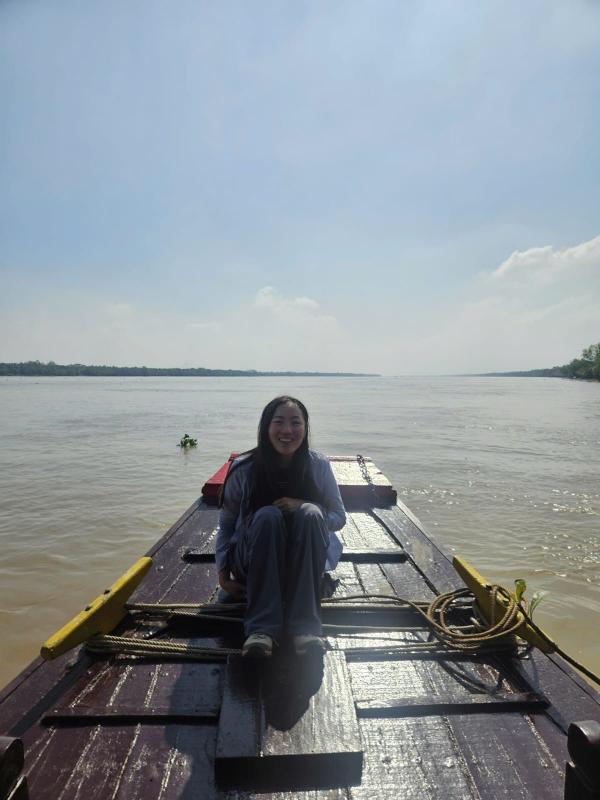
I went looking for authenticity and came back thinking more about where my money goes, what it rewards, and what it quietly replaces.
After graduate school finally came to a close, I was eager to book tickets to a place I have been wanting to travel to for awhile: Vietnam. Spending a month there, I was consistently met with friendliness that transcended the language barrier, breathtaking landscapes that will forever be etched in my mind’s eye, and ways of life different from my own but reflecting many of the same wants and needs: stability, comfort, kindness. Though I absolutely loved my time there and would return in a heartbeat for so many reasons, admittedly, I was surprised by how quickly it seems like Vietnam is changing. When looking for information online, the sheer number of articles saying, “go here; avoid there because it’s touristy” was overwhelming–and it made me consider these changes in the framework of what we call authenticity.
I went with the same hope a lot of travelers carry: to experience a life different from our own, perhaps something “authentic” to the place we are visiting. Not a version designed for tourists, but everyday life—food that isn’t translated, places that don’t feel staged, moments that don’t seem to exist primarily because visitors like me showed up. Pretty quickly, though, I ran into the irony that sits underneath that desire. The more we travel in search of this notion of authenticity, the more our presence becomes part of what reshapes it. We bring money, and that money can genuinely help people—better income, better options, a better life in whatever way they define it. But we also often bring tastes and expectations, and those change what gets offered. That led me to wonder: if travel inevitably changes a place, what does it mean to appreciate it without expecting it to stay frozen for our benefit? Over the course of my month spent in Vietnam, I learned that tourism doesn’t simply erase authenticity—it changes what authenticity means by shifting local incentives.
When I was a student in my early 20s traveling in Europe, I became acquainted with the backpacker community, which glamorized the so-called “banana pancake trail”. This trail is a loose route backpackers often follow in Southeast Asia from Vietnam down to Cambodia and back up through Laos and Thailand. I had assumed the name came from a shared dish from the region, but I later learned that that was not the case. As tourists brought money into the region, locals began catering to the tourist palate, switching away from traditional rice-based meals to meals that included banana pancakes and french fries. The name “banana pancake trail" then became adopted by Western backpackers as local homestays began to be known for serving banana pancakes almost ubiquitously for breakfast [1]. This was not what I had originally envisioned when I learned about backpacking homestays in Vietnam while a young student.

One of my travel inspirations, Anthony Bourdain, never pretended places were frozen in time. Though he initially arrived with a certain inherited image shaped by books like The Quiet American, he noticed how the reality of Vietnam changed over time [2]. The streets of the city, once filled with bikes, were now filled with cars. Old restaurants and shops were replaced by shinier storefronts. Global brands supplanted the smaller, local ones. It’s easy for tourists to read this as a loss, with countless blogs complaining that places have become “touristy”, but it exposes what our authenticity craving often implies: that a place should stay visually and economically legible to our nostalgia. In his later visits to Vietnam, Bourdain acknowledged the loss of the place he first came to know as Vietnam yet was also able to recognize that these changes also represented the increasing standards of living for the people within the cities. While cars were less charming than bikes, they brought along increasing transportation access, and the rise in the prevalence of global imports signaled the rising wealth of the populace. Great books tend to immortalize a particular image of a place in time, but the reality of that place is often far more dynamic.
Early in the trip, I did a motorbike tour known as the Ha Giang Loop, a classic element of the trail. The loop featured some of the most beautiful scenery I have ever encountered in my life, with dramatic green valleys, the turquoise Nho Que River, and sprawling rice terraces farmed by the local ethnic minority populations. Many of the local populations wore handmade clothing I had never seen before, and they spoke languages that were distinct from the Vietnamese I had mostly heard in the cities. Nicknamed the “Happiness Road”, the curvy stretch of road was built by many young volunteers in Vietnam in the 1960s so these communities isolated by the treacherous mountainous terrain would be able to access the healthcare, resources, and education that were more readily available to the cities [3]. It was special to be welcomed generously into the communities with open arms, but at the same time, I could see that a lot of the experience was curated for people like me. Our existence is actively shaping how people in the region are choosing to live. Many have taken advantage of opportunities to build wealth that can lead to a better life for themselves and for their kids. My tour guide, Dat, says that he goes on these 3- or 4-day tours an average of four times a month–and to top off the long days of riding a motorbike, he teaches himself English on an app, because being an English-speaking guide yields better pay. And for him, better pay means being able to afford a crucial surgery for his mom, bread for his family, and perhaps more time spent with his children.

During the latter part of the journey, I rented a motorbike to explore the Mekong Delta region in the south on my own. This time, instead of a tour, I opted to create an adventure myself. The landscape was flatter and the weather was (much) warmer, but it was no less extraordinary. The quiet rice fields, expansive skies, happy children running around freely, and occasional roadside fruit stands contributed to a visual serenity and simple joy I couldn’t quite describe. I was met with so much kindness and openness every step of the way! Although I was met with fewer tourist-facing scripts, I could see some of the effects of tourism taking place, where many were adapting their lives to reap the opportunities tourism promised them. The Cai Rang Floating Market, once bustling with local grocers and customers alike, was now replaced by a few small stalls with just a few tourist-catered items [4]. And the incentives were visible: for a bunch of rambutan, I was charged nearly 10 times the cost I later paid at a quiet roadside stand in the countryside. For my stay in Ben Tre, I booked a homestay that prided itself on being cozier and quieter than some of the stays in the main town. The host kindly gave me a personal tour of her hometown. Though I was met with excitement at each stop, I couldn’t help but wonder what the family-run rice snack workshop, the coconut candy shop, and the serene boat ride would look like when they start to accommodate more and more people like me.
Of course, some benefit more than others in this process as tourism changes a place. The potential winners are tour operators who work with the businesses and travelers to organize a curated experience, business owners who develop the tourism industry, landowners who rent out accommodations, those with language skills, and those who simply are located near popular tourist attractions [5]. But it’s hard to deny that there is some loss, too [6]. Workers at the bottom of the ladder with low bargaining power might be taken advantage of. Communities in tourist hotbeds can be priced out of their homes. Tourists bring an increasing environmental burden through carbon-heavy transport, accommodation development needs, and a demand for imported comforts. And of course, businesses serving local-specific needs can be priced out of key areas as they are supplanted with foreign-serving businesses.

I think it is valid to grieve homogenization and displacement as a result of tourism. However, it is also paternalistic to demand that other societies remain traditional for our consumption when “traditional” is quietly being used to mean “underdeveloped”—a standard we wouldn’t choose for ourselves. In my view, tourists want a world that preserves culture as scenery for their vacation, but do not want to recognize that their travel inherently brings about a series of economic impacts to where they visit. There’s no question that tourism has transformed Vietnam, as it probably has many other places too. And for some, this might mean an improved quality of life, but for others, this might mean unwanted change. Either way, these lived experiences are as authentic as any. For me, I learned that while traveling, the important thing is to travel with humility, respect for local priorities, and an awareness of the impact of where I spend my money.
References
[1] Banana Pancake Trail: The Ultimate Guide 2025 - A Backpacker's World (abackpackersworld.com)
[2] Anthony Bourdain: No Reservations. “Vietnam: There’s No Place Like Home.” Season 5, episode 10. Aired March 9, 2009, on Travel Channel.
[3] Journey On Happiness Road (hagiangtrails.com)
[4] I Went To Cai Rang Floating Market So You Don't Have To (juneisyhawkins.com)
[5] Assessment of urbanization impact on cultural heritage based on a risk-based cumulative impact assessment method | npj Heritage Science (nature.com)
[6] The Impacts of Unsustainable Urbanization on the Cultural Heritage | IntechOpen
Author(s):
