
Tea, Tradition, and Healing: A Wellness Journey Through Morocco
Published 12/11/2025 in Scholar Travel Stipend
Written
by Simrankaur Wahan |
12/11/2025
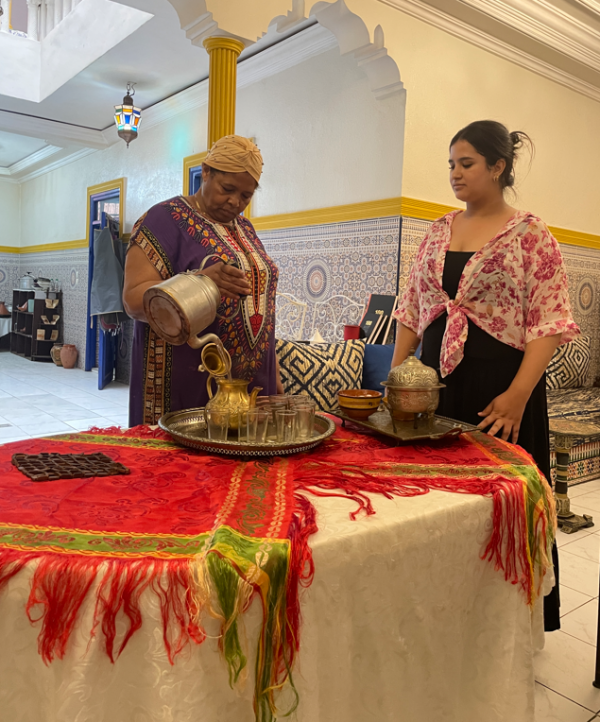
This past month, I had the privilege of visiting Marrakech, Morocco: my first time traveling to Africa. The journey was more than a trip: it was a deep exploration of culture, wellness, and connection. I immersed myself not only as a traveler, but also as a lifelong learner, curious about how Morocco’s culture and healthcare values intersect holistic wellbeing.
A Journey Rooted in Wellness
From the moment I arrived in Marrakech, I felt enveloped by color, scent, and sound. These reminders proved that wellness is woven into daily life. My first stop was the riad I was staying at, a family-run guesthouse built around a serene courtyard filled with orange trees, tired foundations, and a relaxing pool to cool off in, directly in the center. I was greeted with mint tea, which, as I learned, is not simply a beverage- it is a wellness ritual. The pouring of tea from a height is both functional and symbolic, allowing the tea to aerate while representing generosity and grace. The owner of the riad came and shared tea with me as they showed me a map of the medina, or the market we were situated in. This made me reflect on how wellness can be both simple and sacred: taking time to connect with others over something warm and healing.
Spices as Medicine & the Art of Nourishment
One of the most enriching experiences of my trip was visiting Marrakech’s spice markets, where vibrant mounds of turmeric, cumin, saffron, and ras el hanout filled the air with fragrance. Ras el hanout(1) is a blend of 35 healing spices that bring magic to any dish. Herbalists explained that spices are regarded as medicine in Moroccan culture, which reminded me of my own Indian roots. They shared that specific blends are used to strengthen digestion, balance energy, and reduce inflammation, in alignment with the food as medicine principles that guide much of my own research and dietary practice.
I also attended a Food as Medicine cooking workshop(2), where local chefs taught me to prepare tagine using anti-inflammatory spices and seasonal vegetables. They took me to a fruit and vegetable market and showed me the entire medina-to-table cooking process. What stood out was not only the flavor, but also the intention: meals are cooked slowly, shared communally, and designed to nourish both body and spirit. As we cooked, I saw clear connections between Moroccan traditions and global wellness principles, rooted in whole foods, mindful preparation, and community.
This experience deepened my understanding of how culinary culture functions as preventive healthcare. While modern systems focus heavily on treatment, Moroccan households embody a wisdom that food itself can sustain health. These lessons reaffirmed my commitment to integrating food as medicine into my own professional work in healthcare administration and wellness strategy.

Exploring Berber Traditions in the Atlas Mountains
A highlight of my trip was visiting a Berber village in the Atlas Mountains. The drive itself was breathtaking, with winding roads and homes built into cliffsides. Life in these villages is deeply tied to the land: people grow their own food, make argan oil by hand, and rely on ancestral herbal remedies passed down through generations.
I visited a local women’s cooperative, where local women work together to produce oils, skincare with herbs, and medicinal blends. I spent time with herbalists who showed me how plants like verbena, rosemary, and argan are used for healing. Watching them grind and press oils by hand revealed how these cooperatives are forms of empowerment, economically, socially, and spiritually. The cooperative represented how traditional knowledge and entrepreneurship can coexist, preserving culture while building sustainable livelihoods for the village women.
On this journey, I had the experience of a lifetime, hiking up the mountains to a famed waterfall, which has purifying and restorative properties. What was advertised as a quick 30 minute hike was actually a difficult climb of about 1.5 hours, with lots of views on the way. I still smile remembering how sweet the water tasted. I took time to walk barefoot through the waterfall and reflect on the connection between nature and health.
The Healing Power of the Hammam
In Morocco, wellness is not confined to gyms or clinics, but rather it lives in weekly rituals, such as hammams, traditional public bathhouses. After my long hike, I relaxed in a Moroccan hammam where I was scrubbed with black soap and got to relax in a traditional sauna. These hammams were built into every Moroccan home, or riad. This steam bath culture particularly resonated with me. Visiting a hammam reminded me that self-care is not indulgence, but rather it is community care and embodied wellness.
Reflections on Global Health & Vision 2030
While I immersed in these cultural experiences, I also took time to learn about Morocco’s healthcare strategy(3). With a Master of Healthcare Administration, I have become equipped to study global healthcare systems. Morocco’s strategy focuses on expanding universal health coverage and strengthening rural healthcare delivery3. I saw how the country is working to bridge modern healthcare with traditional practices. As Morocco modernizes its healthcare infrastructure, it continues to honor the wisdom embedded in local healing traditions. As someone who is passionate about healthcare transformation and wellness practices, the balance between innovation and heritage offers invaluable insight into how health systems can evolve sustainably.
A Journey of Connection
My time in Morocco reaffirmed by belief that wellness is cultural, relational, and deeply human. From mint tea ceremonies to hammam rituals, from herbal cooperatives to family meals with Moroccan families, I witnessed a country where health is both lived and practiced.
This trip strengthened my resolve to continue exploring the intersections of food, wellness, and health systems as part of my career journey. It reminded me that transformation in healthcare requires understanding people not only as patients, but also as carriers of culture, wisdom, and resilience.
I returned from Morocco inspired, grounded, and more committed that ever to building bridges between global wellness traditions and modern healthcare models. I am deeply thankful to the Milken Scholars Program for supporting this journey, I look forward to continuing my work in global wellness analysis.

CITATIONS:
1 Najem, M., Bouiamrine, E. H., & Ibijbijen, J. (2024). Ras El Hanout: a theriac of therapeutic plants and spices-Qualitative and quantitative ethnobotanical investigation in the city of Meknes (Morocco). Ethnobotany Research and Applications, 29, 1-32.
2 Airbnb. (n.d.). Moroccan Cooking Class with Khmisa & Market Visit. Airbnb. https://www.airbnb.com/experiences/406642
3 Harfaoui, W., Belyamani, L., Zentar, A., Lekehal, B., Obtel, M., HARFAOUI, W., ... & Zentar Jr, A. (2024). The New Reform of the National Health System in Morocco: An Opportunity to Meet the Challenges and Improve the Practice of Anesthesiology. Cureus, 16(4).
Author(s):
