
Osaka, Japan 2025 World Expo
Published 03/19/2026 in Scholar Travel Stipend
Written
by Valencia Lewis |
03/19/2026
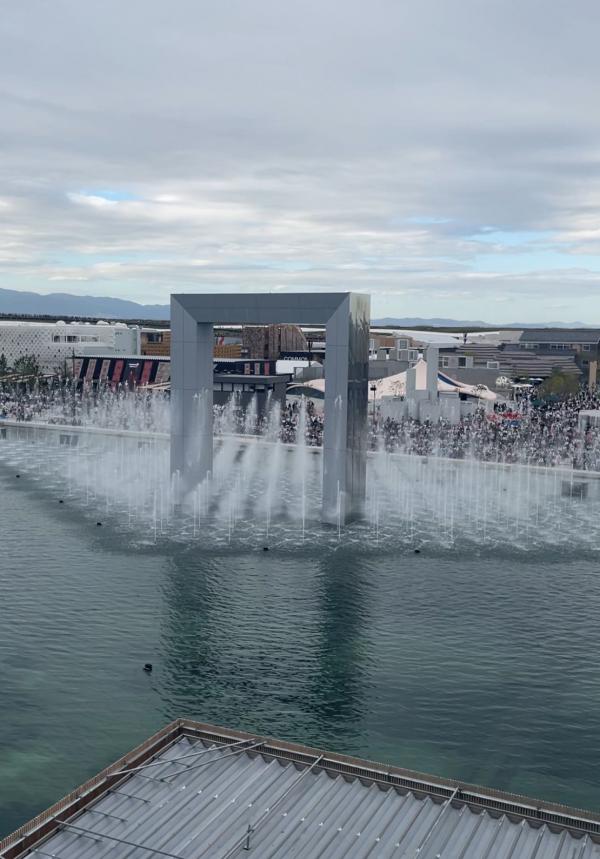
Knowledge is one of the greatest gifts we can share and receive from others as it allows us to build on ideas to further innovations and progress within our world. Sometimes we get used to routines, habits and things that feel consistent and stable. Getting comfortable in the status quo can lead to stagnation when there is a lack of innovation. As time passes other aspects of the world are changing whether it be for the good or for the worse and it’s important we are aware and adapt to those changes. Adapting doesn’t always mean giving up what we know as truth and getting rid of it to adopt something new. Often times change is viewed as throwing out the old and welcoming in the new.
However history, tradition and culture are things that have brought communities together for generations and it is what has connected us. Keeping those traditions at our core and building upon that legacy is what will keep it alive for years to come. It’s important for professional leaders to take these factors into consideration and achieve that balance with the way they contribute to society. As it is leaders in international professional positions that are the stewards of change for their communities and countries impacting thousands of people from their inventions, contributions, and choices.
The idea of sharing knowledge, building upon tradition, and innovating with our communities is championed in a long-standing global event called The World Expo. The World Expo is a “global gathering of nations” where countries across the world gather around a core theme and create exhibits sharing knowledge, innovation and their culture with global audiences. The first expo took place in 1851 in London, and starting from 1988 it established a regular occurrence of taking place once every five years. Managed by the Bureau International des Expositions, The World Expo, similar to some other global events, moves to different host countries, each host country provides space for pavilions of different sizes to be constructed showcasing interactive exhibits from each participating country or organization. Leaning into the theme each country or organization will create exhibitions tying into their culture, customs, inventions and/or specialties. Countries put together teams of professional experts to thoughtfully craft their exhibits, shaping experiences and also culminating useful sharable knowledge that can be helpful to the visitors of the expo. The exhibits are engaging, unique and able to hone in on important messages that can be shared in short time periods. The expo has expanded dramatically over the years and visitors have hundreds of exhibits to see and not a lot of time to fully engage with heavy long material due to the short amount of time that they spend within each one. The thoughtful consideration of messaging is absolutely pivotal to curating a space where international groups can share knowledge with each other easily.
 “World Expos have explicitly been organized around a theme that attempts to improve humankind’s knowledge, takes into account human and social aspirations and highlights scientific, technological, economic and social progress.” 1 It’s when we share knowledge with each other that we are able to make larger impacts. The World Expo provides a place for visitors of all types to be exposed to over a hundred different countries' culture, history and innovations. As a leader in any industry, the world is becoming increasingly interconnected. Our communities are becoming more diverse and interconnected every day and it becomes even more important to lean in and chase after the opportunities that enable you to grow and widen your perspective. That’s how I ended up on a solo journey through Japan to explore the 2025 World Expo in Osaka. During my visit I was exposed to countless different experiences and the knowledge shared by other international professionals from various backgrounds. I was able to engage with cultures that were new and quite foreign to me and was left with a lasting impression of how inclusivity, and access can bring diverse audiences together within a common experience. The world expo includes a varied collection of knowledge from international professionals from all different industries and backgrounds. It’s quite rare to find this kind of collection of knowledge all in one place.
The last World Expo was hosted in Dubai and was set to take place during 2020. However due to the world events of that year the exhibition was delayed and extended into 2021 and 2022. The movement of people across the world had slowed and impacted initial attendance as the world had only just started opening back up and healing from the events that made everyone stand still. Although the World Expo in Dubai was definitely highly impacted by the world events at that time the pavilions were still thoughtfully developed and presented for all visitors. They had shifted the dates and still had over 24 million people register and visit over the six-month period of the exhibition. The momentum from the Dubai World Expo helped to encourage further excitement and participation for the most recent one. Attending the Dubai World Expo is what inspired me to want to attend the Osaka one.
Moving from Dubai, the UAE’s World Expo, Osaka, Japan was the host of the 2025 World Expo. This year's expo theme was “Designing Future Society for Our Lives” with the Subthemes of Saving Lives, Empowering Lives, and Connecting Lives.2 Pavilions scaled from multi-leveled large buildings to smaller booths in Commons where multiple countries collaborated on space. All exhibits leaned into the theme while tying in their own countries’ cultural and historical touches. The Expo had an impressive footprint of over 383 acres which is more than twice the size of the Universal Studios Japan located just 20 minutes away. Around 160 countries and territories were represented in this year’s expo with 25.5 million visitors during the entirety of the event with the last few days being extremely packed with over 200,000 attendees each day.
 One of the best parts of the World Expo is being exposed to cultures and countries you may never have ever gotten the chance to visit before. There are hundreds of pavilions and visiting all of the pavilions isn’t feasible during a single visit. Some pavilions have exhibits that exemplify the themes in interesting ways. The Chile Pavilion was an immersive display of videos projected onto the walls and cultural artifacts hanging from a middle area. The pavilion showcased textiles, and wooden structures that leveraged recycled goods.3 The exhibit leaned into the subtheme of saving lives by highlighting innovations that showcase how the artisans understand the geographical and environmental changes happening in their nation and adjust their consumption of resources while maintaining a balance in their environments. With deforestation, excessive erosion, and destabilized grounds from overuse being major concerns for their country. Chile has continued to adapt and balance the needs of the environment with societal needs. They showcased national innovations that use cutting-edge technology to create laminated wood structures and discussed how they reimagined the use of certain recycled goods in their environment to find new uses for old materials. Living in harmony with nature, and being intentional about recycling materials help to prevent natural disasters such as landslides, and combat the side effects of society's excessive use of environmental resources.
Video: https://drive.google.com/file/d/1Ru7xikbm4_cWE_2QgpusPCWqu7crO54I/view/
During my exploration, I was particularly amazed by UAE’s Pavilion. For me it embodied the subtheme, Empowering lives. The United Arab Emirates centered their exhibits around sharing aspects of their culture and innovations from multiple views. Their Pavilion included videos on the walls showing new constructions and innovations in technology. They had a restaurant selling culturally relevant foods and drinks and their native takes on culinary spreads. In addition they also had live performances with chanting and dancing. Their goal was to share how they as a nation were investing heavily into new developments and empowering dreamers.4 They have been providing opportunities for new industries to flourish and establish roots in their country and reimagining geographical spaces to house more than what anyone had previously imagined could be developed in desert-like environments. Visitors were able to engage in many immersive experiences in the pavilion. Walking in felt like walking into a different country. The engaging occasional performances entranced many visitors as they would walk by the front of the pavilion as well.
Video: https://drive.google.com/file/d/1grMuBr0p_LjOdgw2W9P8_LspQvd61WAp/view/
Video: https://drive.google.com/file/d/1r_RWI9DiiabXUOpS_UsTlrNeoGB45aEz/view/
Video: https://drive.google.com/file/d/1K7i3O_9ILrlYLQndYjB8JMwYnykVZLPZ/view/
One last Pavilion that I think was particularly impactful of an experience was the Philippines Pavilion. It seemed to lean into the subtheme of Connecting Lives. The exhibit was a wonder of color where you walked in and was surrounded by hanging strips of fabric and was able to walk around and view large tapestries on the wall, some were static others interacted with light projections causing the tapestries to look like they were animated. Each tapestry told a story and represented the tradition of weaving and sharing lessons and knowledge across communities.5 Over the generations they have reimagined their traditions in ways that continued to hold strong to their culture but have adapted to the ever-changing world climate by introducing sustainability approaches to their weaving practices. They have leaned into recycling materials, repurposing resources, exchanging knowledge as well as techniques with the various communities within their country. Although weaving has always been a part of their culture they have found a way to play their part in finding solutions to the global issue of pollution and excessive waste. In their communities, they share innovations with neighbors on how they leverage the materials they have in abundance and repurpose them for new positive impacts.
Video: https://drive.google.com/file/d/1JQ3GA--eKhBRaO4zoHpXBFQLl_Ul-XZM/view/
Video: https://drive.google.com/file/d/1XEU-WLSQNLBgw2PmlKVfVmMFJLK8-4F2/view/
Video: https://drive.google.com/file/d/1SyZj482Tf-hdjkpzSRiRC1MprLWwpKRY/view/
 Even though I visited the expo three times and immersed myself in over 40 exhibits there was so much that I experienced and so much more that I would have loved to see. Each country’s contribution showed a different approach to worldly challenges. They shared innovations, research, and tradition with others to expand our imaginations and bring information back with us to our own communities. What made the most impact for me was the amount of diversity in audience they had and how they were able to lean into accessibility for people of different backgrounds. International professionals provided informative overviews of their life’s work in easily digestible ways for other professionals and audiences of all kinds to be able to interact with and understand. Beyond the way each exhibit was intentionally crafted to be impactful with such short view times there were also many other methods to make the information accessible to diverse audiences. The World Expo was hosted in Osaka, Japan this year and most displays were depicted in English, however all exhibits and pavilions included QR codes that allowed visitors to connect to a mobile page for the pavilion and find supplementary information in their language of choice. This year’s expo website included options for 7 different languages.6 Some pavilions with countries that had native languages also included cultural artifacts with their native languages to further expose visitors to their culture. Being able to gather knowledge from around the world on pressing topics is already an amazing feat on its own but to make that knowledge accessible in various languages to these diverse audiences makes all the difference in being able to make sure everyone has the opportunity to truly take away something new and special.
References
1. Bureau International des Expositions. (n.d.). About World Expos. https://www.bie-paris.org/site/en/about-world-expos/
2. Expo 2025 Osaka, Kansai, Japan. (n.d.). Overview. https://www.expo2025.or.jp/en/overview/
3. Expo 2025 Osaka, Kansai, Japan. (n.d.). Chile pavilion. https://www.expo2025.or.jp/en/official-participant/chile//
4. Expo 2025 Osaka, Kansai, Japan. (n.d.). United Arab Emirates pavilion. https://www.expo2025.or.jp/en/official-participant/uae/
5. Expo 2025 Osaka, Kansai, Japan. (n.d.). Philippines pavilion. https://www.expo2025.or.jp/en/official-participant/philippines/
6. Expo 2025 Osaka, Kansai, Japan. (n.d.). Overview. https://www.expo2025.or.jp/en/overview/
Author(s):
