
Cosmetics, Dermatology, and Healthcare Embedded into Korean Culture
Published 05/20/2026 in Scholar Travel Stipend
Written
by Jun Woo Shin |
05/20/2026
Korean culture has slowly evolved into a leader in the fields of cosmetics and dermatology. This can be seen not only through innovation but also through how accessible and integrated these industries are within everyday life and across the world.
If you randomly pointed at a map in Seoul and was suddenly transported there, I would guarantee a dentist, primary care doctor, pharmacy, and skincare store all within a one-mile radius. The culture constantly surrounds itself with new developments in healthcare and beauty, which is reflected in the endless public advertisements, the growth of pharmacies and skincare clinics, and the people’s interest in maintaining a youthful appearance.
Korean cosmetics are deeply embedded in Korean history and culture. Anecdotally, I remember constantly seeing cosmetics incorporated into modern and historical K-dramas. From red paper being used between the lips in historical dramas to the infamous Kahi Balm appearing on seemingly every screen at one point, cosmetics have clearly played a major role throughout both Korean history and modern culture. At the National Seoul Museum in Korea, I got a firsthand look at the cosmetics and beauty tools that were utilized hundreds of years ago. While the exact materials utilized for these cosmetics remain unknown, the pots and pans used to hold these materials are well preserved and displayed at the museum. The intricate craftsmanship and details on these containers made it clear that even back in the day, cosmetics and makeup remained an integral and valuable part of Korean culture. Items resembling mortars and pestles along with smaller pots that could have held powders or creams, further demonstrated how deeply beauty practices are embedded within Korean culture.

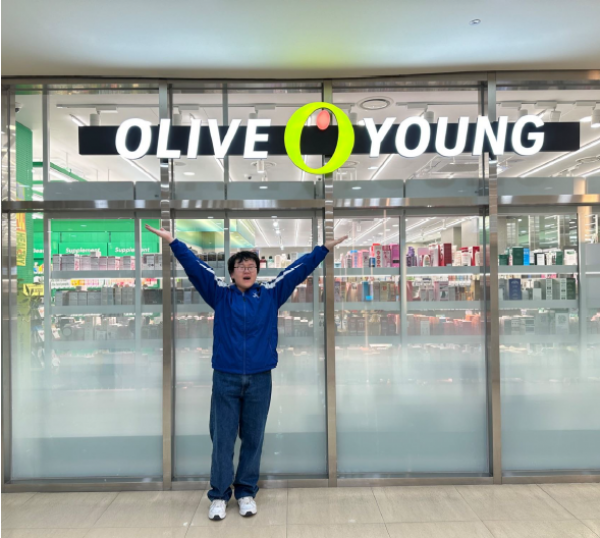
This deep connection between beauty and culture is still incredibly visible in modern-day Korea. In Seoul, I visited the main hub of cosmetics and dermatology, Olive Young, Korea’s version of Sephora. Olive Young is everywhere, and by everywhere, I mean literally everywhere. Olive young dominated airports, corner streets, subway stations, and were sometimes even located only a couple hundred meters from each other. Filled with tourists trying to get in on the boom of Korean skincare, Olive Young is undeniably the main supplier for this increase in demand.
There is also constantly a new craze surrounding ingredients and skincare trends. While tretinoin and retinol are still heavily marketed and utilized in the U.S., Korea has recently shifted its attention toward Polydeoxyribonucleotide (PDRN), an ingredient derived from salmon sperm that is marketed for its anti-aging effects. The trend in Korea seems to have shifted away from retinol and collagen and toward this newer “hot” skincare ingredient, with many products including those found in pharmacies advertising PDRN.

Looking at the current skincare market, brands such as Round Lab, Torriden, and Aestura are of the few that dominate the shelves and social media. It’s important to note that what’s popular in the U.S in terms of Korean beauty and cosmetics isn’t necessarily what is popular in Korea. Brands such as the Beauty of Joseon, which was one of the brands that led the Korean skincare boom in the U.S, barely makes a scratch in the Korean market. With recent restrictions on UV filters, the demand for Korean skincare products, particularly sunscreens. has also continued to grow. According to the Today show, the U.S currently has a limited range of chemical filters that companies and chemists can utilize to formulate sunscreens (1). While mineral filters tend to be standardized across the world, there is a current lack of available chemical filters approved by the FDA in the U.S. In turn, the broader range of filters available in Korea allow for different formulations including those that excel in reducing white cast and are lightweight on the skin. An example is Round Lab, with its extremely popular Birch Juice sunscreen, which is considered one of the best-selling sunscreen brands in Korea. Beyond sunscreen, many of the currently trending products focus on PDRN, although makeup and haircare brands remain just as popular.
Alongside topical skincare products, it’s also interesting that Olive Young stores have incorporated food sections into their stores as well. Products promoting low-calorie, zero-sugar, and fat-loss lifestyles make up a large portion of their food section. In addition, some stores even offer skincare analyses. While, to my knowledge, these analyses are not the most accurate, they still add a fun and interactive aspect to the experience.

It’s undeniable that the huge range of products, ingredients, formulas, and social media exposure has contributed to tourists showing up to Korea solely to buy skincare products. On top of Korea’s cultural standards surrounding self-care and looking “presentable” in public contributes to the false idea that these products alone might help achieve that effect. In fact, research has shown that body distortions were found in over 50% of adolescents in Korea, along with possible links to eating disorders (Hyun et al., 2014). The pressure to maintain a certain appearance in public likely contributes to these distortions and can reflect broader cultural beauty standards within Korea.
One surprising aspect is the lack of intense plastic surgery ads that I was expecting on this trip. While I could have missed the ads while exploring the city, the overwhelming number of ads for plastic surgery or cosmetic enhancements that I anticipated did not seem to be as present within the culture itself. However, I have two possible explanations for this. One possibility could be that Korea could slowly be shifting away from the strict beauty standards embedded within the culture. While this is likely, I personally doubt it’s the case. Rather, based on the amount of skincare, hospitals, and pharmacies embedded into communities, it’s highly likely that cosmetics, and its corresponding procedures have become so normalized in Korean culture that aggressive advertising is no longer necessary. Rather people could believe that these procedures are almost normal or expected among their peers. Research has shown that the public tends to not be opposed or neutral towards plastic surgery (Rhee et al, 2017). In this study, 8 participants out of 290 were opposed to plastic surgery, while over 200 were neutral or in favor of cosmetic procedures.


While the Western and Korean cultures differ, the recent boom in the need for Korean skincare products leads to the question as to whether it's necessary to chase for what Korea has. The innovations in Korea are admirable and suggest a need for innovation in the U.S, but as someone who sees the Korean culture from the outside, innovation doesn’t necessarily mean better. As seen with PDRN, there are still questions surrounding its effectiveness topically compared to injections (4). In addition, PDRN doesn’t have as much research backing it compared to that of retinol (Khan et al., 2022). Without sufficient research backing PDRN, the question of whether one should jump on the trend this early arises. From this trip, I’m still left in awe of all the advancements Korea has made in the fields of cosmetics and dermatology. At the same time, I leave questioning whether this is something I truly want to encourage, especially in a time where cosmetic procedures and beauty standards continue to rise at such a rapid pace.
References:
Jacoby, Sarah. “Korean vs. American Sunscreen: Which Is Better? Dermatologists Weigh In.” TODAY.com, TODAY, 28 May 2025, www.today.com/health/skin-beauty/korean-vs-american-sunscreens-rcna205214/
Jung, Young-Eun, et al. “Factors Associated with Body Image Distortion in Korean Adolescents.” Neuropsychiatric Disease and Treatment, vol. 10, May 2014, p. 797, www.ncbi.nlm.nih.gov/pmc/articles/PMC4027816/, https://doi.org/10.2147/ndt.s63143
Khan, Aawrish, et al. “Polydeoxyribonucleotide: A Promising Skin Anti-Aging Agent.” Chinese Journal of Plastic and Reconstructive Surgery, vol. 4, no. 4, Dec. 2022, pp. 187–193, https://doi.org/10.1016/j.cjprs.2022.09.015/
Lu, Gloria, and Victoria Fu. “PDRN Skincare: Hype vs. Reality.” Chemistconfessions.com, Chemist Confessions, Mar. 2025, chemistconfessions.com/blogs/pdrn-skincare-hype-vs-reality/
Rhee, Seung Chul, et al. “Contemporary Koreans’ Perceptions of Facial Beauty.” Archives of Plastic Surgery, vol. 44, no. 5, 15 Sept. 2017, pp. 390–399, https://doi.org/10.5999/aps.2017.44.5.390/
Author(s):
